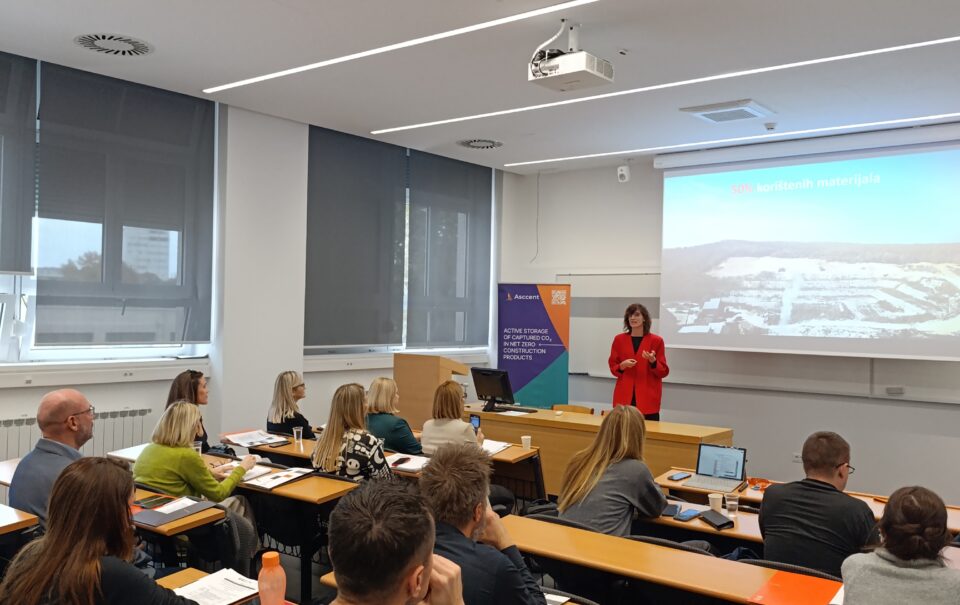
The programme received approval from the Croatian Ministry of Physical Planning, Construction and State Assets and was officially included in the University of Zagreb’s Plan and Programme of Professional Training in Civil Engineering 2024–2025. The programme has a total duration of 50 hours and is designed to equip construction professionals with the knowledge and practical skills needed to integrate sustainability into their work.
The programme consists of three interconnected modules combining theoretical foundations with practical applications of sustainability assessment. Module I introduces the legislative and regulatory framework and the theoretical background of sustainability in the built environment. It addresses the construction sector’s role in climate change, emerging regulatory requirements for building design and construction products, and practical examples demonstrating the application of sustainable solutions and assessment methods across different life cycle stages of buildings and products. Modules II and III focus on developing participants’ practical skills through hands-on work with software tools for life cycle assessment (LCA) at both building and product levels. These modules also encourage critical reflection on the interpretation of assessment results and their application in decision-making, supporting the selection of more sustainable materials, products and construction solutions.
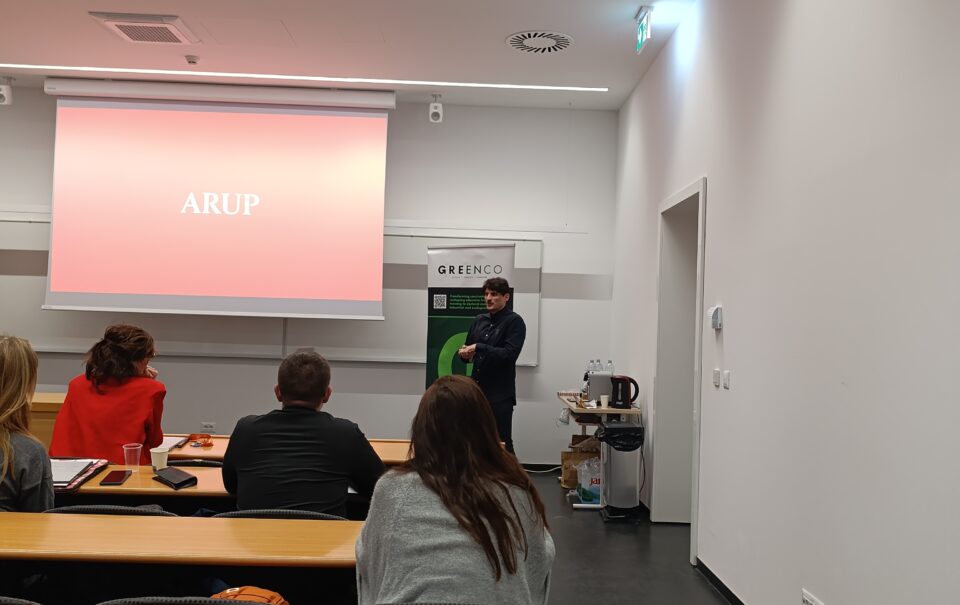
The first workshop, covering Module I, was held on 16–17 October 2025 in Zagreb and brought together 22 participants from the private sector, public institutions and academia. The workshop provided a platform for exchanging knowledge and experiences, discussing current regulatory developments, and exploring approaches to assessing and improving the environmental performance of buildings and construction products. A key contribution to the workshop was a lecture by Dr. Kanavaris, which highlighted the practical application of LCA in engineering design and decision-making. Through real-world case studies, the lecture addressed low-carbon concrete materials and structures, durability, structural optimisation, and advances in concrete technology, illustrating how life cycle-based insights can support more sustainable engineering solutions.
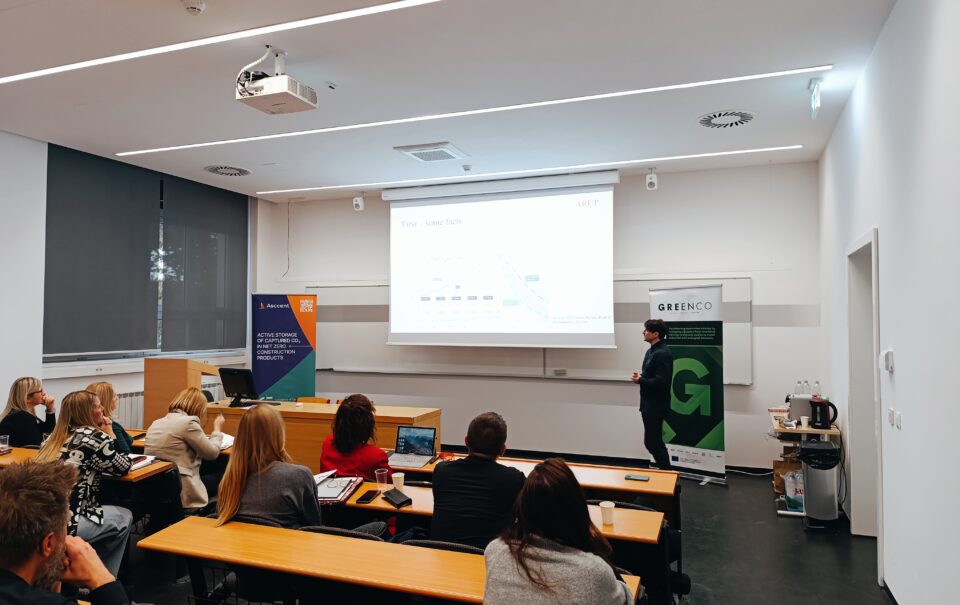
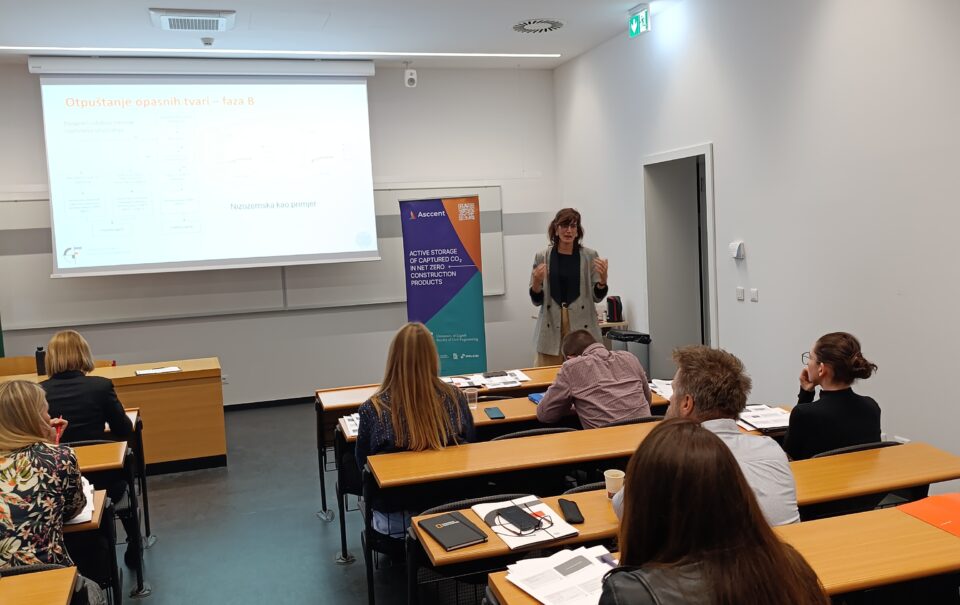
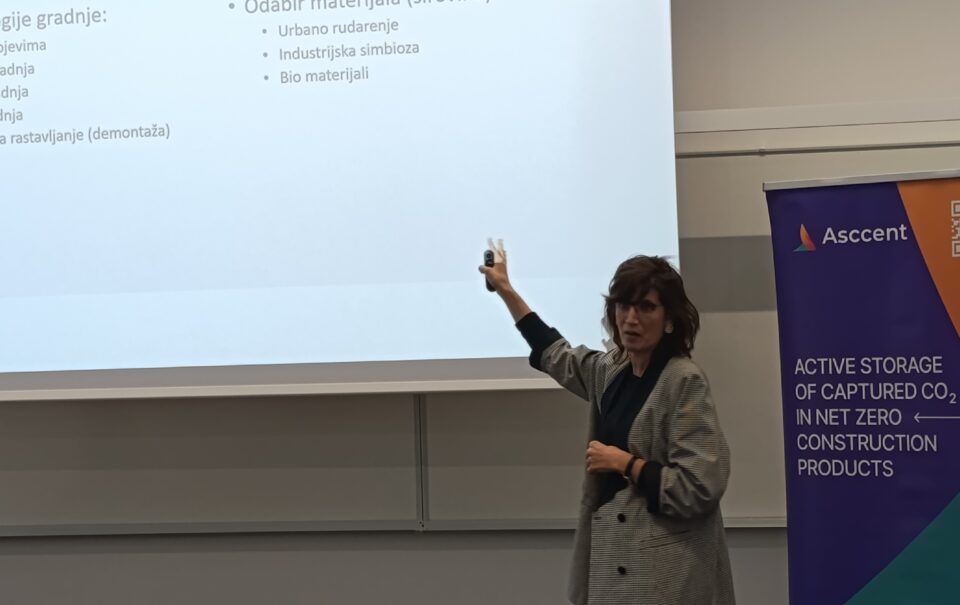
The successful delivery of the first workshop represents an important milestone in implementing the programme and expanding professional education in sustainable construction. The subsequent modules will build on this foundation by providing participants with practical experience in LCA software and the interpretation of environmental assessment results. Through this initiative, the University of Zagreb Faculty of Civil Engineering aims to strengthen professional competencies, foster collaboration between academia, industry and the public sector, and promote the wider adoption of life cycle thinking in the construction sector, contributing to the transition towards a more sustainable and climate-resilient built environment.